(What does it really mean?)
James F. Gauss
April 16, 2026
Excerpted from the author’s book, Embracing the Anti-Christ: The heresy of interfaith dialogue.
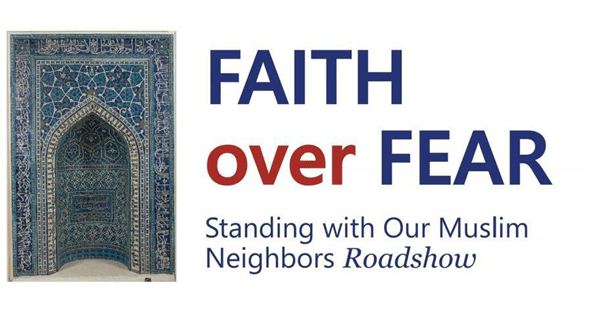
“Faith over fear” is the social justice rallying cry of the Evangelical Lutheran Church in America and others engaged in interfaith dialogue with Muslims. . ..
The ELCA, to add biblical context to their rallying cry of “Faith over Fear” cite 1 John 4:18 and quotes the phrase, perfect love casts out fear. It is often used to come against other Christians who try to share the truth about Islam and who want to reach their Muslim neighbors with the truth of the Gospel.
The True Meaning of 1 John 4:18. By extracting the phrase, “perfect love casts out fear,” from 1 John 4:18, the ELCA, either deliberately or ignorantly misquote the scripture within its full context and apply a completely erroneous biblical message that is not conveyed by Apostle John.
First, the complete verse is, “There is no fear in love; but perfect love casts out fear, because fear involves torment. But he who fears has not been made perfect in love.” What is the “fear” that John is referring to and why would it involve “torment”?
To completely understand this verse, one must understand the context of John’s intent and message which starts in verse one of the chapter.
Beloved, do not believe every spirit, but test the spirits, whether they are of God; because many false prophets have gone out into the world (1 John 4:1).
The “Beloved” are the followers of Jesus Christ and John is reminding them that they are not to believe every spirit, but rather, to “test the spirits” in order to determine if they are from God. Why? “Because many false prophets have gone out into the world.” That was true during the life of Apostle John and it is exceedingly true today.
By this you know the Spirit of God: Every spirit that confesses that Jesus Christ has come in the flesh is of God, (1 John 4:2).
“Every spirit,” Apostle John wrote, “that confesses that Jesus Christ has come in the flesh is of God.” In the last verse of chapter three, John makes it clear what he means about those who confess Christ as coming in the flesh.
Now he who keeps His [Christ’s] commandments abides in Him, and He in him. And by this we know that He abides in us, by the Spirit whom He has given us (1 John 3:24).
Those who can confess that Jesus Christ, the Son of God (see 1 John 3:8, 5:5, 10, 12-13, 20), has come in the flesh, can only do so by the presence of the Holy Spirit that resides in them. Muslims do not believe Jesus is the Son of God, nor do they believe in the Holy Spirit.
The Qur’an proclaims, “Wonderful Originator [Allah] of the heavens and the earth! How could He have a son when He has no consort [partner], and He (Himself) created everything . . . (Qur’an 6:101).
Again, the Qur’an asserts, “. . . and the Christians say: The Messiah is the son of Allah; these are the words of their mouths; they imitate the saying of those who disbelieved before; may Allah destroy them; how they are turned away!” [from the truth] (Qur’an 9:30).
Muhammad had no concept of the Triune God or Trinity, and, in fact, included Mary, the mother of Jesus in the Trinity instead of the Holy Spirit. . ..
Now, back to 1 John 4. As a reminder, in verse two, John stated: “Every spirit that confesses that Jesus Christ has come in the flesh is of God,” and in the next verse, he wrote, and every spirit that does not confess that Jesus Christ has come in the flesh is not of God. And this is the spirit of the Antichrist, which you have heard was coming, and is now already in the world (1 John 4:3; author’s emphasis).
In verse four, John provides comfort for those that follow Christ.
You are of God, little children, and have overcome them, because He who is in you is greater than hewho is in the world (1 John 4:4).
Who are them and who is he? Them are the antichrists and he is the devil. Those who are in Christ Jesus—who are saved by grace through faith in Him—need not fear the antichrists or the devil, because through Christ’s shed blood, He and those who accept His work on Calvary, have overcome the antichrists and the works of the devil.
“They [the antichrists] are of the world,” John continues. “Therefore they speak as of the world, and the world hears them” (1 John 4:5).
We are of God. He who knows God hears us; he who is not of God does not hear us. By this we know the spirit of truth and the spirit of error (1 John 4:6; author’s emphasis).
Apostle John is making it clear, those who are able to discern false prophets, false teaching and the antichrists are those who truly know Jesus Christ and have the indwelling of the Holy Spirit. The Islamic ideology is born and bathed in an antichrist spirit or the antichrist spirit, Satan himself. Islamic ideology proclaims, in part, the following:
- Jesus is not the Son of God;
- Jesus did not die on the cross, nor did He die at all;
- that Jesus was not resurrected;
- that He did not die for anyone’s sins;
- that there is no salvation through Jesus Christ;
- that there is no guarantee of eternal life;
- and the reversal of many other Biblical truths.
Despite this obvious antichrist ideology and firm Muslim stance against the Christian faith, interfaithers would much rather stand “shoulder to shoulder” with antichrist Muslims than join with their supposed “brothers and sisters in Christ” to bring the Gospel of Jesus to those lost in darkness.
In verse six, John states that, We are of God. Who are the we? The we of verse six that John refers to are the true followers of Jesus Christ—those who can discern the false prophets and the antichrists. Those who fully accept Jesus Christ, His atoning work on the cross and share His Gospel of salvation.
Now, for the moment, let us jump ahead to verse fourteen. “And we have seen and testify that the Father has sent the Son as Savior of the world (1 John 4:14; author’s emphasis). To testify is to swear by, affirm, provide evidence of, bear witness to or be a witness of the truth; the reality that God the Father Almighty—not Allah—sent His Son, Jesus Christ—not Muhammad—as the Savior of the world.
All true Christians—true followers of Jesus Christ—desire to provide testimony to the truth, sacrifice and mission of Jesus Christ and His saving grace for everyone that calls upon Him for forgiveness and redemption.
But what does it [the righteousness of faith] say? “The word is near you, in your mouth and in your heart” (that is, the word of faith which we preach): that if you confess with your mouth the Lord Jesus and believe in your heart that God has raised Him from the dead, you will be saved. For with the heart one believes unto righteousness, and with the mouth confession is made unto salvation (Romans 10:8-10).
Now, to look at verse seventeen, the verse right before the verse that the interfaith group, Faith over Fear, the Evangelical Lutheran Church of America, likes to partially misquote.
Love has been perfected among us in this: that we may have boldness in the Day of Judgment; because as He is, so are we in this world (1 John 4:17; author’s emphasis).
The New Living Translation (NLT) states the verse this way: And as we live in God, our love grows more perfect. So we will not be afraid on the Day of Judgment, but we can face him with confidence because we live like Jesus here in this world.
First, let us refresh verse 18 in its entirety:
There is no fear in love; but perfect love casts out fear, because fear involves torment. But he who fears has not been made perfect in love (1 John 4:18; author’s emphasis).
Remember, the phrase “cherry-picked” by the ELCA interfaithers is perfect love casts out fear. However, verse 17 states clearly that this “perfect love that casts out fear” has to do with the followers of Jesus Christ not having to fear or “be afraid on the Day of Judgment.”
There is no fear in love, John proclaims. No fear on the Day of Judgment. Why? Because perfect love casts out fear. Love of who and fear of what?
According to Apostle John, true love is this:
Beloved, let us love one another, for love is of God; and everyone who loves is born of God and knows God. He who does not love does not know God, for God is love. In this the love of God was manifested toward us, that God has sent His only begotten Son into the world, that we might live through Him. In this is love, not that we loved God, but that He loved us and sent His Son to be the propitiation for our sins. Beloved, if God so loved us, we also ought to love one another (1 John 4:7-11; author’s emphasis).
Who are the beloved? Are they the strangers among us; the non-believer; our neighbors? No, the “beloved” are strictly brothers and sisters in Christ, and only them. Are the followers of Christ called to love the non-believer and even their enemies? Yes, but that is not what John is addressing here.
If interfaithers want to use 1 John 4:18 as their rallying cry, then they should be sharing its true meaning with Muslims: That without Jesus as their Lord and Savior they should fear the Day of Judgment.
Apostle John is reiterating what Jesus taught His disciples.
A new commandment I give to you, that you love one another; as I have loved you, that you also love one another. By this all will know that you are My disciples, if you have love for one another (John 13:34-35; author’s emphasis).
Right before His sacrifice on the cross, Jesus told His followers that the world of non-believers would come to know Him and His love by how those who confessed to be Christ followers loved one another. Not by how they loved their non-believing neighbor.
John, one of the apostles closest to Jesus, wrote:
If someone says, “I love God,” and hates his brother, he is a liar; for he who does not love his brother whom he has seen, how can he love God whom he has not seen? And this commandment we have from Him: that he who loves God must love his brother also.
Whoever believes that Jesus is the Christ is born of God, and everyone who loves Him who begot also loves him who is begotten of Him (1 John 4:20-5:1; author’s emphasis).
Interfaithers prefer to misquote the Bible to justify standing with those who believe in an antichrist ideology, rather than stand with brothers and sisters in Christ who have a real desire to see captives set free from an oppressive, satanic belief system.
So, why are true Christ followers not to fear the Day of Judgment? Because:
- they discern the false spirits and the false prophets (1 John 4:1).
- they know the Spirit of God (1 John 4:2).
- they know and can identify the antichrist spirit (1 John 4:3).
- they are of God and God is in them (1 John 4:4).
- they know the antichrists are of this world (1 John 4:5).
- and they know the spirit of truth (1 John 4:6).
So, 1 John 4:18, which interfaithers so proudly proclaim in faith over fear, has nothing to do with fearing people. It solely has to do with the fear of the Day of Judgment, which the followers of Jesus Christ need not fear, because Christ’s perfect love for those who chose Him casts out all fear of judgment.
Members of the ELCA blindly excerpt this phrase from scripture to gain political points while misinterpreting its real significance and eternal meaning.
For a complete understanding of the heresy of the interfaith movement, read the author’s book,
Embracing the Anti-Christ: The heresy of interfaith dialogue available on Amazon worldwide.
In his true prophetic manner Dr Gauss has pointed to a clear and present danger most of us have not realized. Islam is a foreign government along with a belief system which has come into America in like manner as the Trojan Horse. Dr Gauss says the Gospel is all that can save any Muslim. Preach it to them. He warns us to not allow Islamic leaders to come speak to your congregation. The Church and it’s leaders need to read and heed this book before it is too late!
Befriend a Muslim by giving him truth.
David L. Cobb, Evangelist, Southern Baptist Convention


Leave a Reply