James F. Gauss, Ph.D.
May 3, 2025
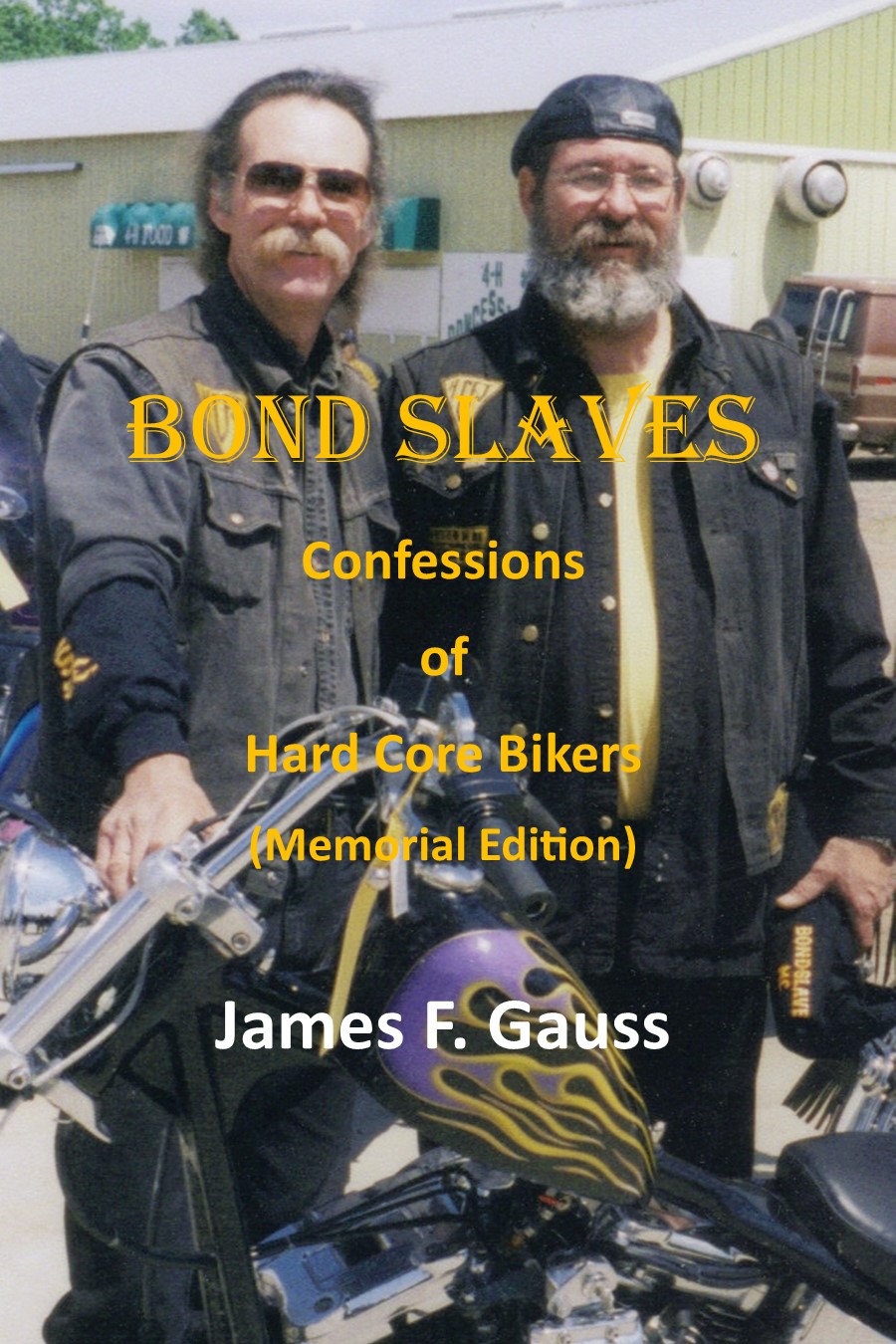
Bond Slaves: Confessions of Hard Core Bikers
James Gauss’ book, Bond Slaves: Confessions of Hard Core Bikers, was an amazing book. I could hardly put it down. I couldn’t wait to read the next Biker’s story and to see how they overcame with Christ! I loved this book, reading their testimonies. Such a well written book by Gauss. The testimonies and stories are very powerful! What these Bikers went through, the lives they lived, were rough and hard until they met Jesus and were saved. How they surrendered their lives to Christ, turning their lives around to be willing servants of Christ. They are sharing the gospel to those who are hard to reach or unwilling to be reached by others. These testimonies will touch your heart, soul, and I believe change lives. Praying lives are changed from this book.
This book encourages me even more to share the gospel more boldly. I have been doing jail ministry for 15 years. I think this book would be great for the inmates I minister to so they can see how the Lord can save them, deliver them from their addictions, bondage of sin and be used by God.
Stephanie Ellison
The following is an excerpt from the Introduction of the Bond Slaves.
It was as early as the late 15th century that the bicycle—the forerunner of the motor bike or motorcycle—was artistically conceived by the Sistine Chapel artist, Michelangelo. Yet, it would take almost another 400 years before a pedal-powered, chain-driven model of the conveyance we know as the bicycle today became popular in European countries and the newly developing country of America. It did not take long before inventors in Germany, France and the United States started to discover ways to motorize this two-wheel marvel of transportation. By the turn of the twentieth century, a motorized version of the bicycle was starting to make its imprint as a transportation alternative—not for the general public, but for the few brave and adventurous souls willing to risk life and limb.
By 1898, Charles Metz of Waltham, Massachusetts, began mass production of his version of the “motorcycle” along with his rival four-wheel mode of transportation, the automobile. Three years later what would soon become known as the Indian Motorcycle Company was formed by George M. Hendee and Carl Oscar Hedstrom in Springfield, Massachusetts.
In 1903, childhood friends, William S. Harley and Arthur Davidson, introduced their entrée into the new world of motorcycles. As the United States entered into World War I in 1917, the U.S. military saw this new machine as having great value for the rough terrains of Europe. Harley-Davidson rose to the occasion and produced over 20,000 military style motorcycles for the war effort. Four years later as battle weary veterans returned from the “War to End All Wars”, many yearned for the freedom and thrill of motorcycle riding, making Harley-Davidson the largest manufacturer of motorcycles in the world by 1920. When America entered World War II in December, 1941, H-D was quick to answer the military call once again and produced over 90,000 military motorcycles. With the end of the war in 1945, once again, returning veterans sought out the motorcycle to relieve war-stressed tensions, express individuality and freedom and hit the open road for thrills and adventure.
Minorities of returning thrill-seeking war veterans, from the very beginning, saw themselves as renegade free spirits or “outlaw” bikers or the “one-percenters”—monikers that would later become synonymous with carefree, lawless motorcyclists. Some of these men had come from the death-defying experiences of war and feared nothing. Some road alone; others rode in groups that became organized into gangs or clubs of like-minded road warriors. Today, well over seven million motorcycles are registered in the United States alone, with an estimated ten million riders. By 2011, it is estimated that motorcycle sales worldwide will reach almost 56 million units.
The derogatory moniker of “outlaw” and “one-percenters” that was coined by the print and broadcast media over fifty years ago still sticks to a few hard core bikers. Depending on one’s viewpoint, the names were first used to describe a group of unruly, free-spirited World War II veterans who had trouble re-entering society after the war. Unlike other veterans who went into depressive shells (now called post-traumatic stress syndrome), these highly charged men of action sought out the excitement and camaraderie of the motorcycle world. Coming together mostly in California, their rowdy exploits came to the forefront of public attention when a large contingent of this biking brotherhood “invaded” (as the media stated) the small town of Hollister, California over the Fourth of July weekend in 1947.
To this day there is still a lot of controversy over media, eye-witness and biker versions as to what actually occurred that weekend. But what was reported to the world by the newspapers, radio and Life Magazine was that a group of hell-raising, drunken bikers trashed this small defenseless—four policemen—rural community just south of San Jose. Over fifty years later, surviving residents of the town claim that much of what was reported or photographed by the media was erroneous or staged by the media. This includes the infamous photo of a drunken biker on page 31 of the July 21, 1947 issue of Life with the caption, Cyclist’s Holiday: He and friends terrorize a town. Regardless of what the truth of the matter might have been, the label of “outlaw” to describe less than civil motorcyclists has stuck for over sixty years.
A scant few of the biking world donned this classification and wore it, as they continue today, as if it were a badge of honor. The American Motorcycle Association and the media of the era dubbed them the “one-percenters,”—those few, or the one percent of the motorcycle-riding community who acted in such a lawless manner. To this day, some hard core biker clubs still proudly display a “1%-er” patch on their club vests.
What follows are testimonies about God’s grace and sacrificial love—a love that surpasses human understanding. A love that is willing to reach down into the pits of hell to save the lost and the forgotten. It is about a love so great that it is willing to forgive no matter what a person’s past may have been. God has apparently found some willing servants to go into the dives and hell holes of the biker society and prisons to spread His message of forgiving love to those who are hard to reach or unwilling to be reached by others.
Those who shared their testimonies—not wanting to give any glory to the devil or their darkened past—were careful in describing their former exploits and in some cases were uncomfortable sharing explicit details. In most cases, graphic amplification of past events was avoided except where it was germane to the anecdote that was being shared. However, their newfound love and commitment to Christ and the knowledge that their past is fully forgiven did allow them to be amazingly candid about how God saved them from certain self-destruction. They know that there is no glory in the past life, only in the present and future life with Christ.
It is important to note, that despite their past escapades and encounters with law enforcement authorities, none are wanted men, nor are there any infractions or crimes of their past that have not been prosecuted and resolved. Their past is completely behind them and many have sought reconciliation and restitution with the parties they offended in their former lives.
One of the extraordinary features of their testimonies is that often they submitted themselves to the Lord at a time when they were entrenched in their turmoil and sin without God using the Christian witness of another person. In many cases, God heard their cry and reached out in a very direct and personal way to make Himself known to them. However, in almost all cases of their miraculous transformation in Christ, it was preceded by fervent intercessory prayer by their wives, relatives, Bible study groups, or fellow bikers.
In most cases, to protect their privacy, only first names or nicknames are used. In some cases, names and places have been changed to protect the innocent and individual privacy of family members. Names of outlaw clubs that some may have belonged to have been deliberately left out to protect current club members and the in-roads these evangelical bikers have made with these clubs.
It is the hope of this writer that each reader will see some part of themselves or someone they know in at least one of the stories or characters that follow. That they will find the glimmer of hope they need to come before Christ, seeking His forgiveness and redemptive grace, that will enable him or her to proceed through this life from victory to victory as only Jesus Christ can empower us to do.
Be sure to get your copy of this thrilling, life-changing book for only $9.95 on Amazon. ORDER TODAY! Share this post with your social media community. It just might save a life you care about.
Also visit the author’s creative Christian-themed products at JGB-Products.
 JGB Products
Leave a comment